Why This AI Cookbook Tool Writes Like a Magazine, Not a Robot
You had a great cookbook idea. Maybe it was a niche you actually know — a smoothie line you already sell, a family gluten-free thing, a weekend grilling hobby. So you fired up an AI tool and typed in your topic. And what came back looked like a Wikipedia article with a grocery list stapled to it. Recipe names with no soul. No images. No layout. Just raw text dumped in a document, nowhere close to something you'd hand to another human.
Or you got a template — and it was obvious. The kind of thing where every recipe page is the same gray box, same font, same nothing. You've seen a thousand of those on Amazon. They don't sell, and they don't deserve to.
That's not a you problem. That's a tool problem. Most AI book tools weren't built for cookbooks. They were built for text. They do text fine. Cookbooks aren't text — they're a visual experience first.
I'm Damon Nelson. My co-founder Wayne Atkinson and I have spent ten years building software for content creators — tools we use ourselves before we ship them to anyone else. When we built the first version of BookMasher, we knew cookbooks were different. But version one didn't treat them that way. The output was decent, not publishable. Definitely not something you'd be proud of.
So when we rebuilt the whole platform from scratch for Version 2, the cookbook module was the thing we obsessed over most. I'll tell you exactly what I mean by that in a second. But the short version is this: I used it to build a gluten-free cookbook for my wife — printed it at home, handed it to her — and her actual reaction, with no idea I'd just generated it that afternoon, was: 'Oh, this is beautiful. How'd you do this?' That was the moment I knew we'd gotten it right.
The tool is called BookMasher. And the cookbook module isn't just a book template. It's a full magazine-style production — written, illustrated, and formatted in one session, from a single topic you type in.
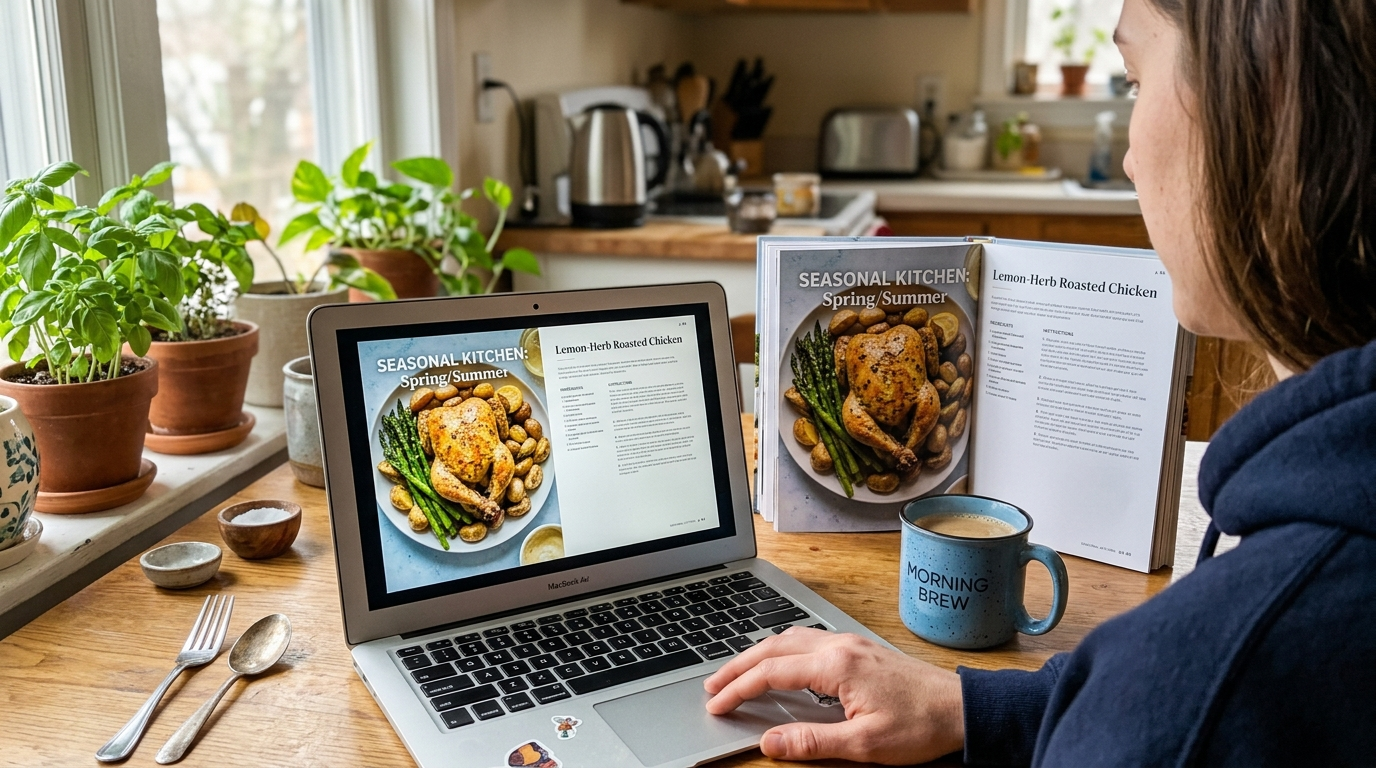
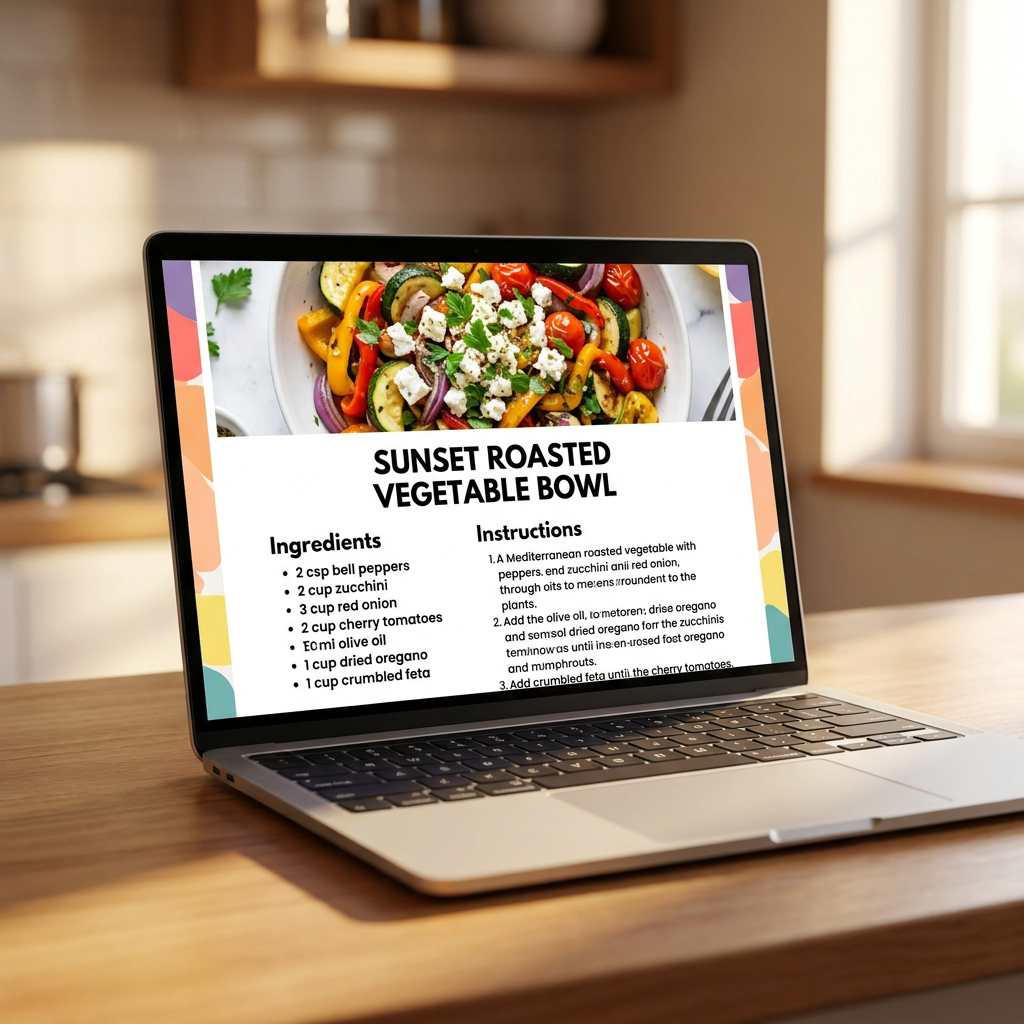
Magazine-Style Pages, Not a Grocery List With a Header
Most AI tools export plain text. The BookMasher cookbook module generates full-bleed, magazine-inspired recipe pages — think actual food-publication layouts, not a blank white document. Each recipe gets its own styled page with matching AI-generated food imagery. You type your topic. It handles the visual design. The result looks like something that belongs on a bookstore shelf.
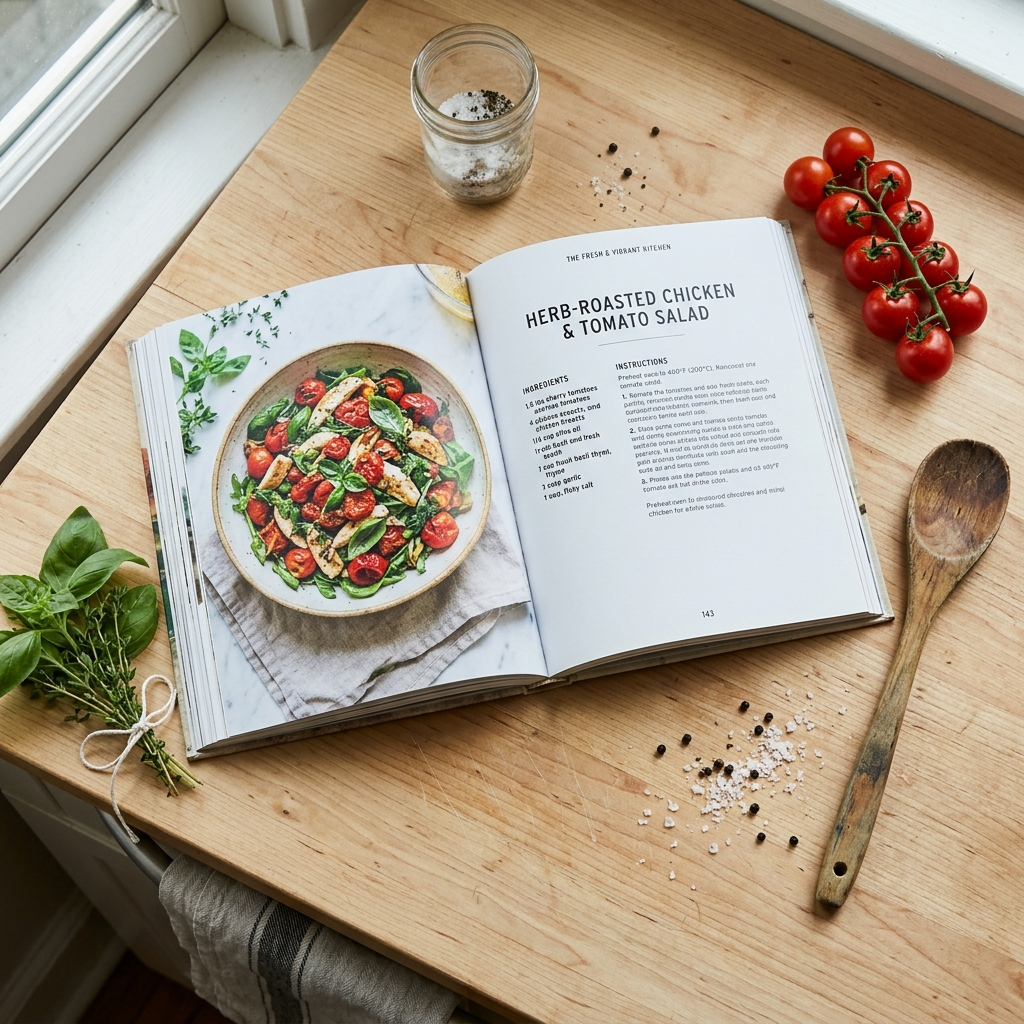
One Topic In. Recipes, Images, Cover, and KDP Files Out.
Here's what the process actually looks like: you type a topic — say, 'healthy weeknight dinners under 30 minutes.' BookMasher writes the recipes, generates matching food illustrations for each one, designs a front cover with your title and author name, adds a back cover with your bio, and exports a KDP-ready PDF and EPUB. No API keys. No separate image tool. No formatting gymnastics. Most users finish a complete illustrated first draft in the same session they start.
Style and Units Controls — Because 'Cups' Versus 'Grams' Actually Matters
The new Style & Units menu lets you choose your recipe format and whether measurements run metric or US. That sounds small until you realize every other AI tool forces you to do a find-and-replace across 40 recipes manually. Here, it's one setting before you generate. The cookbook comes out right for your audience the first time, not after an hour of editing.
Ten Book Types, One Tool — But You're Here for the Cookbook
BookMasher has ten writing modules built in — children's picture books, puzzle books, how-to guides, gardening books, and more. Every one of them is included. But the cookbook module is the one that surprises people most, because nothing else on the market produces illustrated, magazine-styled recipe books from a single input. Competitors write text. This one builds the book.
What buyers are saying
Results may vary.
"I'm Steve Bailey, and this tool has allowed me to create multiple cookbooks in just a couple of hours. It has honestly taken more time to read them myself and get up to speed on what I'm professing to know. Not only did it create the cookbooks, but it also created a foundation that I've been able to"
— Steve Bailey"I was very excited about bookmasher when it came out because one of the products that I promote is a line of green superfoods. I thought, wouldn't it be cool to add a cookbook of recipes to make, like, breakfast smoothies or dinner smoothies or evening smoothies. But I'm not a huge techie type guy, "
— Scott Paton"I wrote 3 books this last Saturday. A cookbook, a Problem Solving book, and a Gardening book. All with amazing content and images."
— Scott RogersHere's what you're getting: BookMasher Version 2, with the full magazine-style cookbook module included — plus all nine other book types, built-in AI illustrations, front and back covers, one-click PDF and EPUB export, and KDP-ready formatting. No API keys to configure. No separate tools to stitch together.
Right now there's a $400 off lifetime deal running on the Version 2 launch. You can get in for a 7-day trial at $7 to see it work on your own cookbook idea first. That's the deal as it stands — try it this session, have a finished illustrated draft before you go to bed.
Start My Cookbook — Try BookMasher for $7 →Questions people actually ask
Will my cookbook actually look good enough to sell on Amazon KDP?
That's the right question to ask. The magazine-style module generates full-bleed food imagery and styled recipe pages — not plain text in a box. The output is a KDP-ready PDF and EPUB with front and back covers included. Whether it sells depends on your niche and how you market it, but the files are formatted to Amazon's specs and designed to look like a real book.
I've tried AI tools before and the writing sounded robotic. Is this different?
Honestly, this is where Version 2 focused most of its rebuild effort. The writing module is designed to produce human-sounding content you'd actually put your name on. That said, you'll still want to read through the draft and add your own voice, stories, and any specific details. Think of it as a very strong first draft, not a finished manuscript you never touch.
Is this right for me if I'm not a cookbook writer or a tech person?
It's built specifically for non-technical people — coaches, creators, and hobbyists who want a real publishable book without a six-month grind. No prompts to engineer, no API keys to paste in, no formatting work. You type a topic, set your style and units, and generate. If you can describe what your cookbook is about, you can use this.
What if I want to write a novel or a full-length fiction book?
Then BookMasher isn't the right tool for you — and that's a straight answer. It's built for short, illustrated non-fiction books: cookbooks, how-to guides, children's picture books, puzzle books, and similar formats. Full-length fiction is a different job and requires a different kind of tool.
What happens after the 7-day trial? Am I locked into a subscription?
The $7 gets you seven days to use the tool and finish a real book. The Version 2 launch also has a lifetime deal available at $400 off. Billing details and what comes after the trial are laid out on the sales page — worth reading before you start so there are no surprises.
Can I use my own photos in the cookbook instead of AI-generated images?
Yes. Version 2 added a 'Bring Your Own Images' feature — you can drop in your own food photos for free, or use the AI-generated illustrations, or mix both. If you already have a library of food photography, you're not forced to replace it with AI art.